
Eagle, ID Neighborhood Guide: Discover the Best Communities in 2026
Eagle continues to draw attention across the Treasure Valley as one of Idaho’s most desirable small cities. According to U.S. Census QuickFacts, Eagle’s population grew into the roughly 30,000–35,000 range by the mid‑2020s, reflecting sustained demand for housing, schools, and amenities. This Eagle ID neighborhood guide outlines how different communities compare on lifestyle, schools, recreation, and pricing, helping buyers distinguish between riverfront enclaves, golf‑course developments, and emerging family neighborhoods throughout this fast‑growing Boise suburb.
What Defines Eagle’s Overall Lifestyle and Layout?
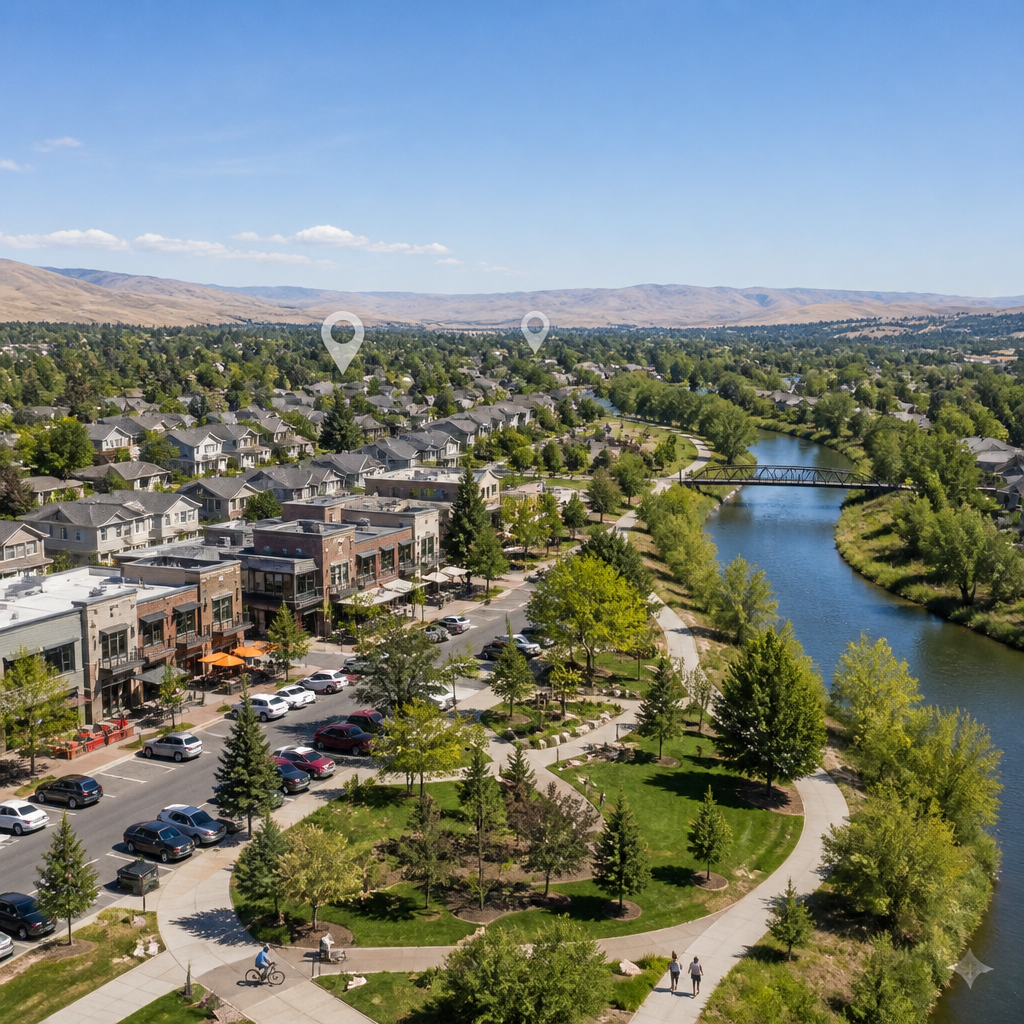
Eagle stretches along the north bank of the Boise River, with the Boise River Greenbelt tracing the city’s southern edge. State Street (Highway 44) and Eagle Road (Highway 55) form the main east‑west and north‑south corridors, linking residential pockets with Downtown Eagle, Meridian, and Boise. According to Walk Score, Eagle posts an overall walkability score around the low 20s, meaning most residents rely on cars, while the compact downtown around Old State Street is significantly more walkable.
Tree‑lined neighborhoods extend north toward Floating Feather Road and west toward Linder Road, while larger estates and view homes sit closer to the Boise foothills. The layout allows quick access to parks such as Reid Merrill Park, Stephen C. Guerber Park, and Heritage Park in the downtown core. According to travel distance estimates from Google Maps, Downtown Boise sits roughly 10–12 miles southeast, keeping commute times commonly in the 20–30 minute range outside peak congestion.
Neighborhoods cluster around amenities that shape daily routines. Golf‑course communities such as Eagle Hills Golf Course and Banbury Golf Course draw residents who prioritize fairway access and clubhouse life. River‑adjacent subdivisions including Two Rivers and The Shores emphasize water features, ponds, and trail connectivity to the Boise River Greenbelt. Master‑planned communities like Legacy, Brookwood, and Eagle Ranch blend parks, paths, and community pools with a mix of single‑family homes and townhomes, appealing to a wide range of budgets and household sizes.
On summer evenings near Old State Street, café lights reflect off the windows of Rembrandts and Bardenay Restaurant & Distillery as live acoustic music drifts from patios. The aroma of smoked brisket from Bodacious Pig Barbecue mingles with the sweetness of waffle cones from nearby ice cream counters, while families wander between Heritage Park and the small boutiques along Eagle Road. The crunch of gravel underfoot and the warmth of brick storefronts give Downtown Eagle a distinctly small‑town, tactile charm.
How Do Eagle’s School Zones and Family Amenities Compare?
School quality strongly shapes neighborhood choices across Eagle. According to GreatSchools, Eagle High School earns ratings in the upper range of 7–9 out of 10 in recent years, supporting strong demand around its attendance zone north of Floating Feather Road. Eagle Middle School and Eagle Hills Elementary similarly post above‑average scores, while North Star Charter School on Linder Road offers a K‑12 option that attracts families from multiple subdivisions.
Neighborhood design often centers on parks and playfields. Stephen C. Guerber Park, for example, includes multi‑use fields, splash pad features, and playgrounds that serve surrounding communities such as Brookwood and Saguaro Canyon. According to amenity maps from the City of Eagle, there are more than 10 public parks within city limits, plus regional assets such as Eagle Island State Park, which offers a swimming beach, disc golf, and roughly 5 miles of trails.
Education‑focused households often gravitate toward Legacy, Brookwood, or neighborhoods feeding into Eagle High School due to bus routes and short drive times. According to Niche, the West Ada School District, which serves Eagle, ranks among Idaho’s top districts, with college readiness and graduation rates that consistently outpace state averages by several percentage points. These factors contribute to stable enrollment and ongoing investment in facilities and extracurricular programs.
Family amenities extend beyond public schools. Youth sports use fields at Reid Merrill Park and Guerber Park, while club programs practice at facilities along Eagle Road and in nearby Meridian. Library services at the Eagle Public Library support homework and reading programs, and community events such as Eagle Fun Days and the Eagle Saturday Market fill Heritage Park during warmer months. The clustering of these resources within a radius of roughly 2–3 miles from Downtown Eagle shapes a lifestyle that balances suburban space with small‑city engagement.
Which Eagle Neighborhoods Offer Premier Luxury and Golf-Course Living?
Luxury buyers frequently focus on riverfront and golf‑course properties, where price points can climb into the seven‑figure range. According to Realtor.com, higher‑end Eagle listings commonly fall between $1.1M and $2.4M as of late 2024, with premium estates exceeding that range during competitive cycles. Communities such as Two Rivers, The Shores, and Island Woods showcase water features, private ponds, and direct access to paths connecting with the Boise River Greenbelt.
Golf‑course living remains another defining feature of Eagle’s upper‑tier market. Eagle Hills Golf Course and Banbury Golf Course anchor several subdivisions where many homes back directly onto fairways or water hazards. According to neighborhood data from Redfin, homes within established golf‑oriented areas often command price premiums in the range of 10–20% compared with similarly sized properties farther from course frontage, reflecting both views and lifestyle amenities.
At sunrise on Eagle Hills Drive, sprinklers hiss softly across the greens while the first golfers roll carts across the dew‑coated paths. The air holds a faint scent of cut grass and pine from mature trees lining the fairways, and distant church bells from St. Michael’s Episcopal Church mix with the low hum of carts near the clubhouse. Light glints off backyard fountains along the course edge, creating a calm, almost resort‑like atmosphere that sets the tone for the day.
Luxury enclaves often integrate private community pools, tennis courts, and elaborate entry landscaping along streets such as Floating Feather Road and Linder Road. Many homes feature oversized garages for boats or recreational vehicles suited to weekend trips from Eagle Island State Park to Cascade Lake, roughly 70 miles north. Larger lot sizes, often in the range of 0.3–0.5 acres or more, help preserve privacy and support outdoor kitchens, covered patios, and detached shops that are less common in denser parts of the Boise metro.
Where Are the Best Options for Active Lifestyles and Outdoor Access?
Eagle’s proximity to the Boise River, foothills, and regional parks makes outdoor access central to neighborhood selection. According to Idaho Parks and Recreation, Eagle Island State Park covers approximately 545 acres, offering swimming, equestrian trails, and a terrain park within a short drive from subdivisions along State Street and Linder Road. Many residents live within a 10–15 minute drive of the park, depending on traffic along Highway 44 and Eagle Road.
The Boise River Greenbelt runs along Eagle’s southern edge, connecting neighborhoods near Edgewood Lane, Eagle Road, and the riverside communities of Island Woods and Rivers End. Cyclists and runners can follow paved paths for more than 25 miles into Boise, according to route maps maintained by the City of Boise. Subdivisions with direct trail access often emphasize this advantage in marketing materials and can see increased buyer interest from those who prioritize low‑impact commutes or daily recreation.
Within city limits, parks such as Reid Merrill Park, Friendship Park, and Orval Krasen Park offer playgrounds, open fields, and picnic shelters within walking or biking distance of adjacent streets including Ballantyne Lane, Park Lane, and Hill Road. According to facilities data from the City of Eagle, several of these parks include reservable shelters and sports fields that host leagues, tournaments, and seasonal festivals, helping support social connections among residents.
Neighborhoods north of Floating Feather Road, including portions of Legacy and The Preserve, sit closer to the foothills, allowing quicker access to trailheads in the Eagle foothills and beyond. Drive times to popular hiking areas near Bogus Basin Road are often in the 45–60 minute range, depending on conditions. This balance of suburban comfort and mountain access makes Eagle particularly appealing for households that value weekend skiing, rafting along the Payette River corridor, or mountain biking just a short drive from home.
How Do Home Prices and Housing Types Vary Across Eagle?
Housing variety in Eagle ranges from townhomes near Downtown Eagle to estate properties bordering farmland or the Boise River. According to Realtor.com townhome listings, attached and smaller detached homes often fall in the approximate range of $400,000–$600,000, providing relatively attainable entry points compared with larger custom builds. These properties tend to cluster near Eagle Road, Old State Street, and infill developments south of State Street.
Mid‑range single‑family homes in subdivisions such as Brookwood, Eagle Ranch, and Legacy commonly offer three to five bedrooms and roughly 2,000–3,000 square feet. Based on current surveys by Redfin, many such homes trade in the approximate band of $650,000–$900,000, depending on lot size, age, updates, and proximity to parks or water features. Corner lots or properties backing to open space regularly command modest premiums.
Upper‑tier custom homes, particularly in Two Rivers, The Shores, and riverside portions of Island Woods, push above the seven‑figure mark. According to luxury listing snapshots on Zillow, high‑end residences often exceed 3,500 square feet and sit on lots measuring 0.4 acres or more, with amenities such as multi‑car garages, dedicated offices, and guest suites. Many include direct pond frontage, extensive landscaping, and outdoor entertainment areas designed for four‑season use with heaters and covered patios.
New construction continues on Eagle’s northern and western edges, where builders introduce fresh floorplans and energy‑efficient designs. According to permit trends reported by the Ada County Assessor, hundreds of new residential permits have been issued in recent years, shifting more inventory into master‑planned communities. This expansion helps balance demand but also adds pressure on key corridors such as Linder Road and Floating Feather Road, where traffic counts have increased noticeably over the past decade.
The 30,000–35,000 population estimate cited at the start of this Eagle ID neighborhood guide reflects a small city transitioning into a regional hub without losing its intimate scale. That same figure from the opening underscores how sustained growth shapes everything from school investments to riverfront trail expansions. The Boise Regional REALTORS® monthly market reports provide the clearest view of evolving price bands across Eagle’s communities. Buyers who register listing alerts and commit to touring promising homes within 24–48 hours of market debut before the spring surge in March typically secure better terms and more options. Households that delay those actions until after Q2 often encounter thinner inventory, faster offers, and reduced room for negotiation throughout the rest of the year.
FROM OUR BLOG

Discover Luxury Homes for Sale in Nampa, ID: 2026 Market Insights
Discover Luxury Homes for Sale in Nampa, ID: 2026 Market Insights Nampa’s luxury segment continues to mature as the city grows beyond a population of about 109,000 residents, according to U.S. Census Bureau QuickFacts. Upscale properties near Lake Lowell, along Greenhurst Road, and around the Deer F

Exploring New Construction Homes in Meridian, ID: What You Need to Know
Exploring New Construction Homes in Meridian, ID: What You Need to Know Meridian has transformed from a small farm town into one of Idaho’s fastest-growing cities. According to U.S. Census Bureau estimates, Meridian’s population climbed from roughly 75,000 in 2010 to well above 117,000 by 2020, an i
Finding Your Dream Vacation Home in Eagle, ID: 2026 Buyer’s Guide
Finding Your Dream Vacation Home in Eagle, ID: 2026 Buyer’s Guide Nestled along the Boise River, Eagle, Idaho has evolved into one of Ada County’s most sought-after destinations for second homes and retreats. According to Redfin, homes in Eagle spent an average of about 32 days on market as of late
WORK WITH US
Reach out to an expert real estate agent today. Dive into the world of luxury real estate with guidance from our devoted team. Your dream home is within reach.